Twelve requests
A call note, a ticket and a Slack thread from the same account count three times.
Discover
Bring interviews, call recordings, surveys, support tickets, CRM notes and Slack threads into one place. Sage turns them into claims, ties each claim to the minute, page or row it came from, and tells you when new research changes a decision you already made.
We put the continuous in continuous discovery.
01 — The problem
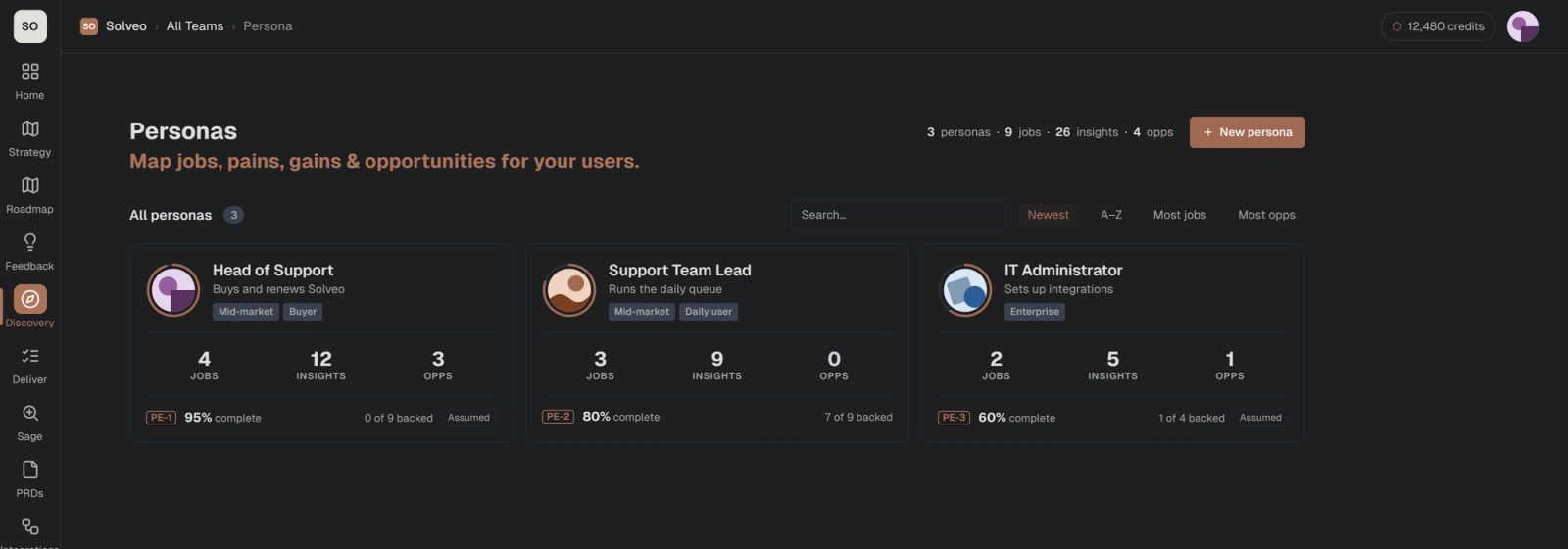
Solveo's Head of Support persona was 95% complete: four jobs, twelve insights, three opportunities. It had been written from what the sales team heard in demos. Checked against the research, none of its nine claims was backed.
Two of those claims carried the whole go-to-market. Meanwhile the interviews and tickets describing a different person sat in another folder. Research gets done. It just doesn't reach the beliefs and decisions it should change.
02 — A better question
Storing and finding research is a solved problem. The question that decides outcomes is the next one: what does this finding change, how sure can we be, and which decisions depend on it?
03 — Open the twelve
Say a feature is on the roadmap because twelve customers asked for it. Open the twelve and the picture changes in three moves. This is the conversation a PM walks into when someone in the planning meeting asks “how do you know?”
The team that can answer that question in the room keeps its roadmap. The team that has to go and look loses a week, and usually the argument.
A call note, a ticket and a Slack thread from the same account count three times.
One customer counts once, however many interviews and tickets they appear in.
The claim was written for enterprise. Every piece of evidence came from mid-market.
They arrived after the roadmap was set. Sage re-rated the claim and flagged the item that rests on it.
04 — The new way
Continuous discovery needs continuous research. Every new interview, ticket, thread or experiment result is read against what the team already believes, and every belief knows which decisions lean on it.
0101
Uploads, recordings and the calls, threads and notes your tools import. The original is always kept.
0202
Recordings are transcribed. Each source is classed, dated and its speakers identified.
0303
Specific statements, each anchored to the minute, page, message or row it came from.
0404
Claims in your opportunities, solutions and roadmap get their state from the evidence.
0505
New research re-rates the claims it touches. The decisions that depend on them get flagged.
05 — How a claim gets its state
On artifacts, in Research, in documents and in Sage's answers, every claim carries one of four labels. They describe the evidence, not whether the claim is true.
The rules behind the label
Three interviews and two tickets from the same customer are one voice when a claim is rated. Ten quotes from one call are one source.
Strategy documents, PRDs and decision logs count as one origin together, however many there are, and can never back a claim on their own. Customer evidence or secondary research has to agree.
Interviewers, moderators and colleagues are recognised by name and email domain. Their words never count as customer evidence.
Evidence is judged against when the claim was made, so a 2024 figure doesn't contradict a 2026 plan. When a source has no date, the upload day is used and marked as assumed.
Evidence that didn't count is shown struck through, with why: a different period, a withdrawn participant, the same source as the claim. Confirm a link yourself and it counts.
06 — The Shorter Loop way
Raw first
Open at source lands on the page of the PDF, the timestamp in the recording, the message in the thread or the row in the spreadsheet. The original upload is never changed.
Who said it
Speakers become participants, matched by email or CRM contact and filed under their account. Industry, size, plan and role ride along with every piece of evidence.
Splits
When enterprise evidence backs a claim and mid-market evidence consistently contradicts it, the claim shows “Evidence splits by company size”. Split it into two scoped claims, edit the wording, confirm.
Strength
Each claim lists its support mix (“2 interview, 1 survey”), what each piece counts as, its age, sample size and study design. “All from one kind of source” is flagged. No score out of 100.
Gaps
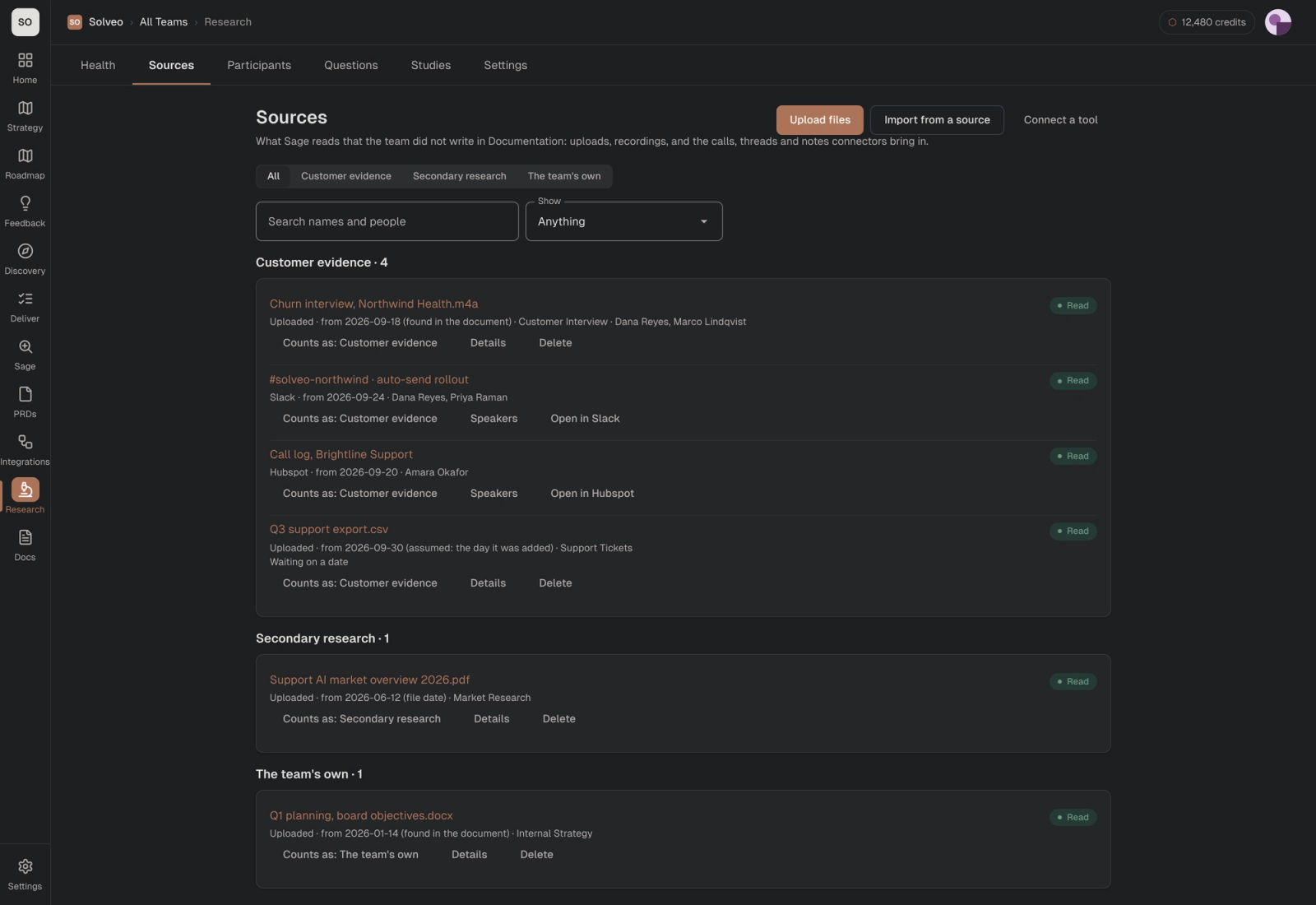
Customer groups you have fewer than three pieces of evidence from. Claims with no evidence from the segment they name. Research questions still open, oldest first.
Lineage
What rests on this lists every decision, requirement and artifact that depends on a claim. Lineage walks both ways, with each link marked Recorded or Inferred by AI.
07 — Personas
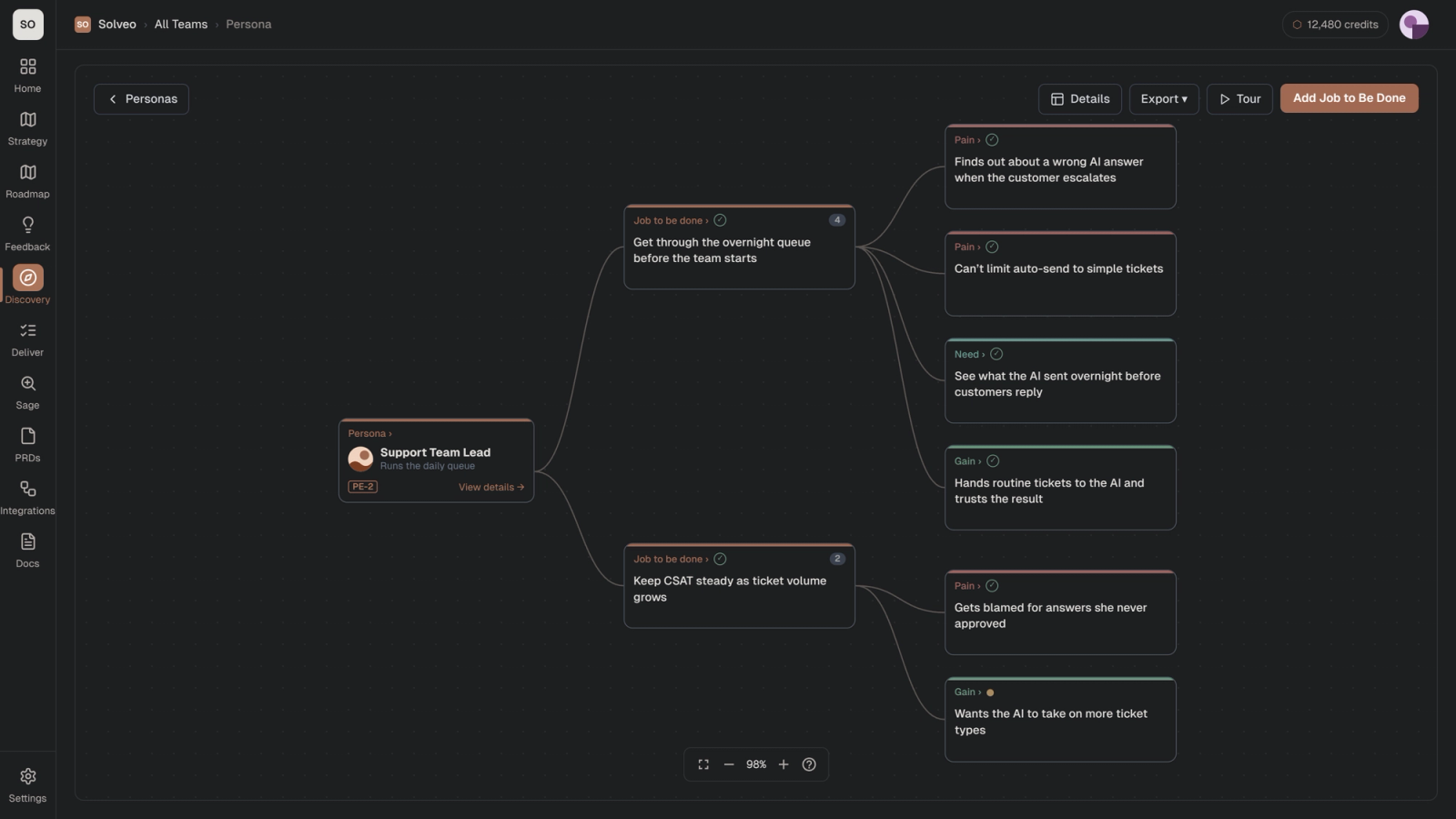
Over a few weeks, 207 feedback items and 21 exit interviews came in. Sage kept finding the same person: a support team lead who runs the queue, switches auto-send off after a wrong answer, and never attends a demo. She came up in 14 of the 21 exit interviews.
Sage drafted her persona from the transcripts and tickets, with every job, pain and gain linked to the customers who said it. Five of the six were backed. One went the other way: the team expected team leads to want the AI on more ticket types. They wanted it on fewer, handled reliably.
08 — What comes in
Imports are dated to when the conversation happened, not when it synced. Each source is classed as customer evidence, secondary research or the team's own, and you can change the class with one click.
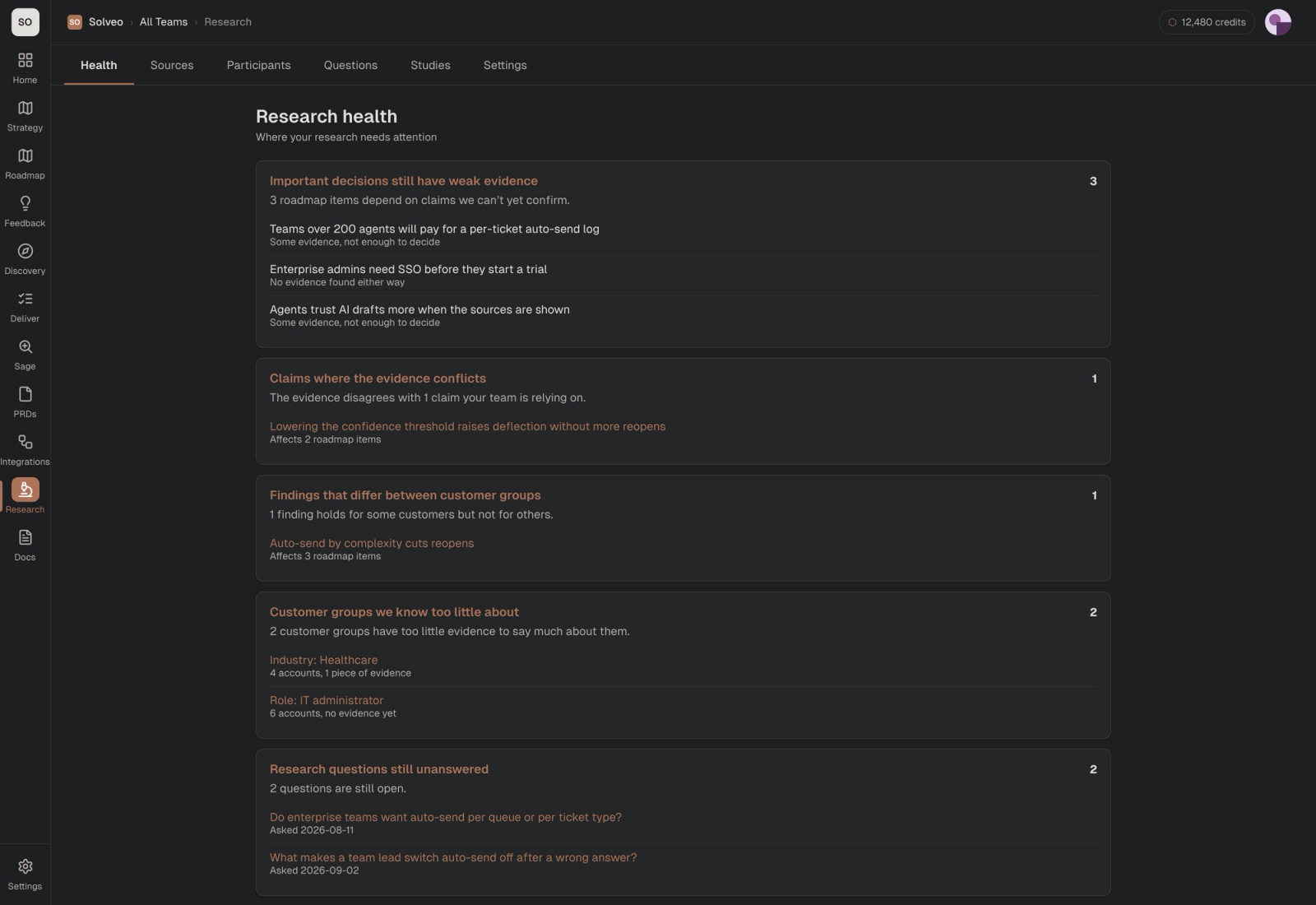
Coming soon: Gong, Fathom, Grain, Zoom calls, Delighted, Maze, SurveyMonkey, Typeform, UserTesting.
09 — Health
There is no insights counter. The landing page lists only what needs a person, and says “Research looks healthy” when nothing does.
The research challenge
Pick your top roadmap item and ask: is the case for it still sound? Ask Shorter Loop. Then ask whatever you use today: your research repository, or Claude or ChatGPT with the same files uploaded.
Every good tool will find relevant quotes. Read both answers against the four questions and see which one you would take into a planning meeting.
Customer story · Solveo · after the plan
Solveo, a B2B customer-support platform, committed to auto-send by complexity on the strength of churn interviews, CRM losses and support data. The plan was done. The research wasn't.
The team split the claim in two. Auto-send stayed on by default for teams under 50 agents, became opt-in above 200, and a research question went out for the accounts in between. Nobody had to remember that the February research existed, or go looking for what had changed since.
Evidence from 14 independent customers, all gathered before February.
From Slack Connect channels and Fireflies.ai, dated to the conversation, with speakers
Larger teams reported auto-sent replies reaching enterprise customers without a
Listed on Health under findings that changed recently, and on each item under what depends on this.
Bring the research you already have. Sage shows you what it supports, what it contradicts and what it never covered.